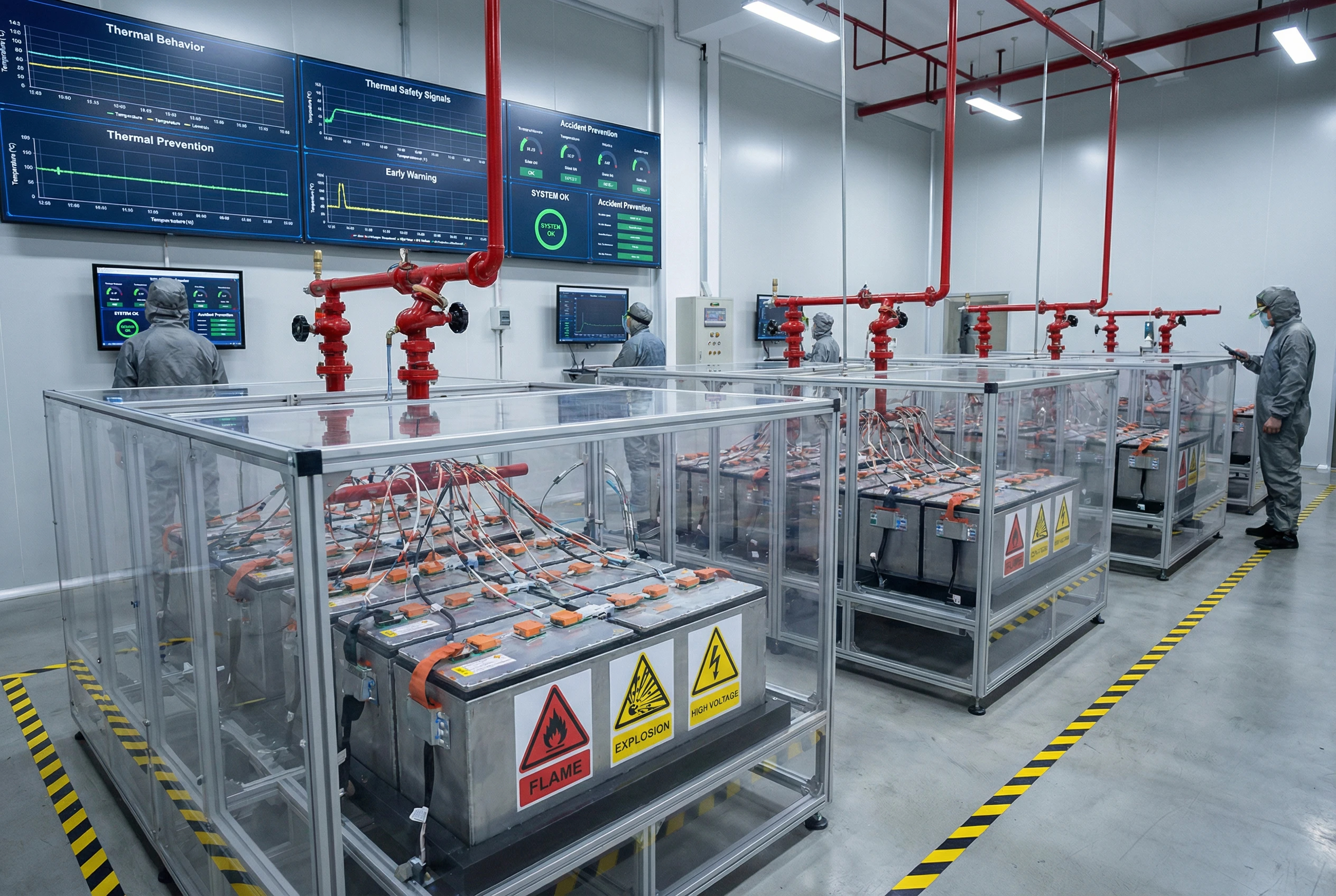
Real-World References & Actionable Implementation
In battery cell manufacturing, safety risks are not theoretical; most incidents originate during formation, first charge, welding, or electrolyte handling. Indian manufacturing facilities face additional challenges due to climate, power fluctuations, and manpower turnover, making layered safety systems and well-documented contingency plans essential rather than optional. Effective safety management combines engineering controls, trained personnel, real-time monitoring, and rapid decision-making.
Key Real-World References & Actions
| Area |
Industry Reality |
Actionable Implementation |
| Thermal Runaway |
Highest probability during formation & aging |
Dedicated formation zones with thermal barriers |
| Detection Systems |
Single-mode detection is insufficient |
Combine thermal + gas + smoke sensors |
| Suppression Strategy |
Water alone causes collateral damage |
Use clean agent / water mist with isolation |
| Electrical Risk |
Shorts during welding are common |
Current-limited power supplies |
| Chemical Exposure |
Electrolyte leaks during handling |
Secondary containment + spill SOPs |
| Emergency Response |
Delayed response escalates damage |
Shift-wise emergency drills |
| Risk Documentation |
Static risk sheets become outdated |
Live FMEA linked to CAPA |
| Insurance & Audits |
Insurers demand documented plans |
Fire Safety & Risk Dossier |
| Regulatory Compliance |
Missing test records delay dispatch |
Certification checklist per product |
| Post-Incident Review |
Root causes often superficial |
Mandatory fault tree analysis |
Practical Insight:
Facilities that integrate automatic power cut-off and rack-level isolation during abnormal thermal events significantly reduce propagation risk. Equally important is documenting near-miss incidents; these often reveal early warning signs before a major failure occurs.