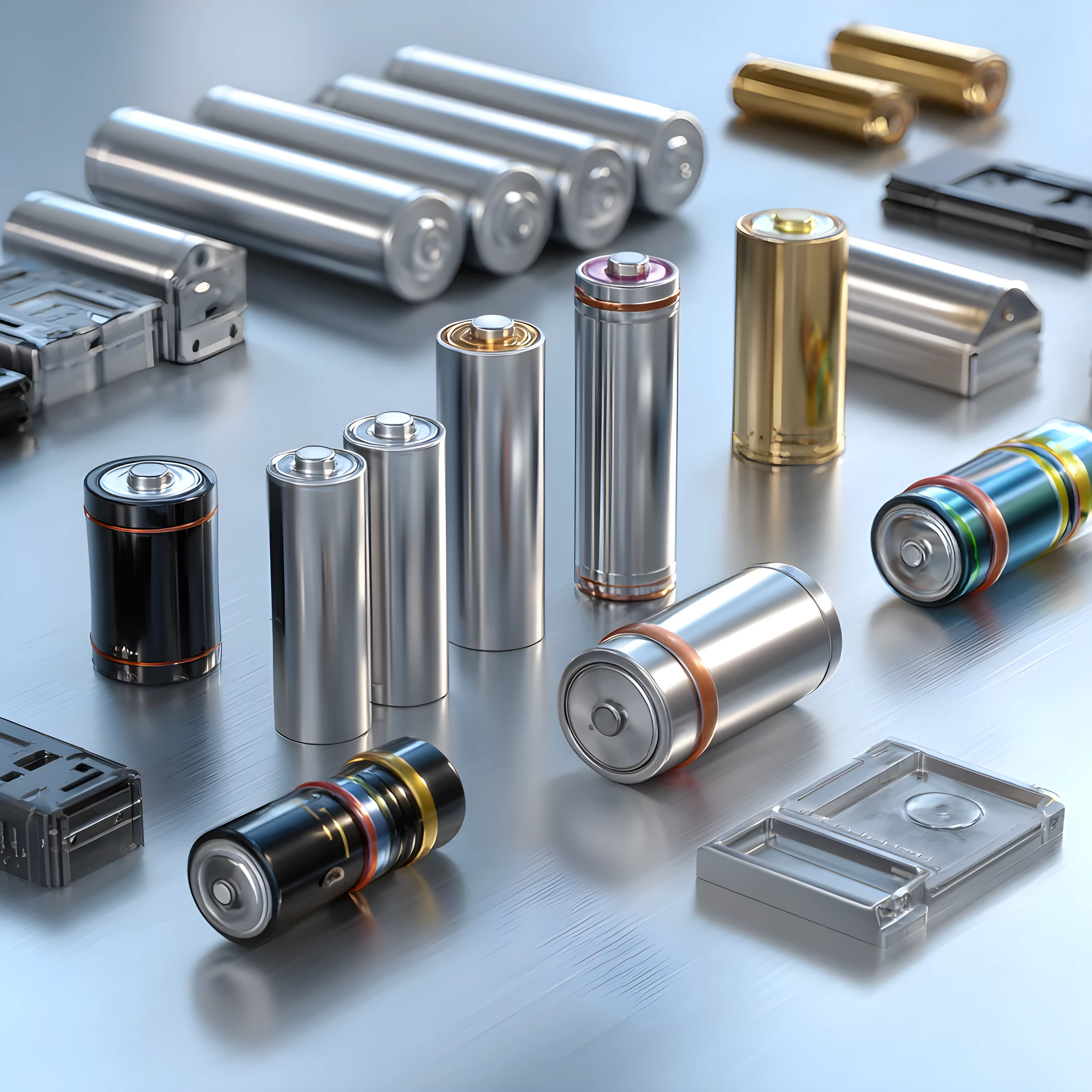
Concise overview of battery cell chemistries, their applications, and commercial formats. We'll explore common chemistries like LFP (Lithium Iron Phosphate), NMC (Lithium Nickel Manganese Cobalt Oxide), NCA (Lithium Nickel Cobalt Aluminum Oxide), LCO (Lithium Cobalt Oxide), and Solid-State, detailing their unique properties...
Types of Cell Chemistries and Their Applications
| Chemistry |
Description |
Common use cases |
| LFP (LiFePO₄) |
High safety, long life, low cost,
lower energy density |
Energy storage,
low-speed EVs |
| NMC (LiNiMnCoO₂) |
Balanced energy, cost, and thermal stability |
Electric cars, power tools |
| NCA (LiNiCoAlO₂) |
High energy, used in premium EVs |
Tesla vehicles |
| LCO (LiCoO₂) |
High energy density, but costly |
Smartphones, laptops |
| Solid-State |
Non-flammable, high energy potential |
R&D stage, future EVs |
Selection Based on Application
| Sector |
Recommended Cell |
Why? |
| EV – 2W/3W |
LFP or NMC811 |
Safety, good cycle life |
| Consumer Devices |
LCO or pouch-based NMC |
Compact, lightweight |
| Grid Storage |
LFP |
Stable, long-life |
| Premium EVs |
High-nickel NMC/NCA |
High energy per weight |
Commercial Cell Formats
| Type |
Shape |
Common Usage |
| Cylindrical |
18650, 21700, 4680 |
Tesla, Bosch power tools |
| Prismatic |
Boxed cells |
BMW i3, energy storage |
| Pouch |
Flat layers |
Smartphones, GM EVs |
| Coin |
Round, small |
IoT, hearing aids |
Case Study: Tesla’s Shift from NCA to 4680 NMC
Tesla’s new 4680 cylindrical cell moves toward higher energy density with less cobalt and simpler manufacturing, reducing cost per kWh while boosting range.