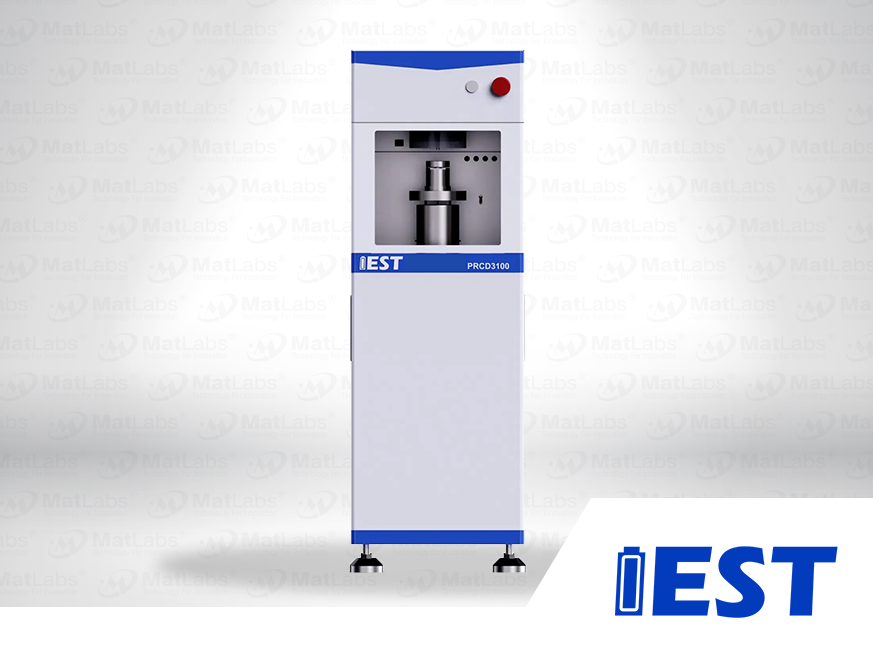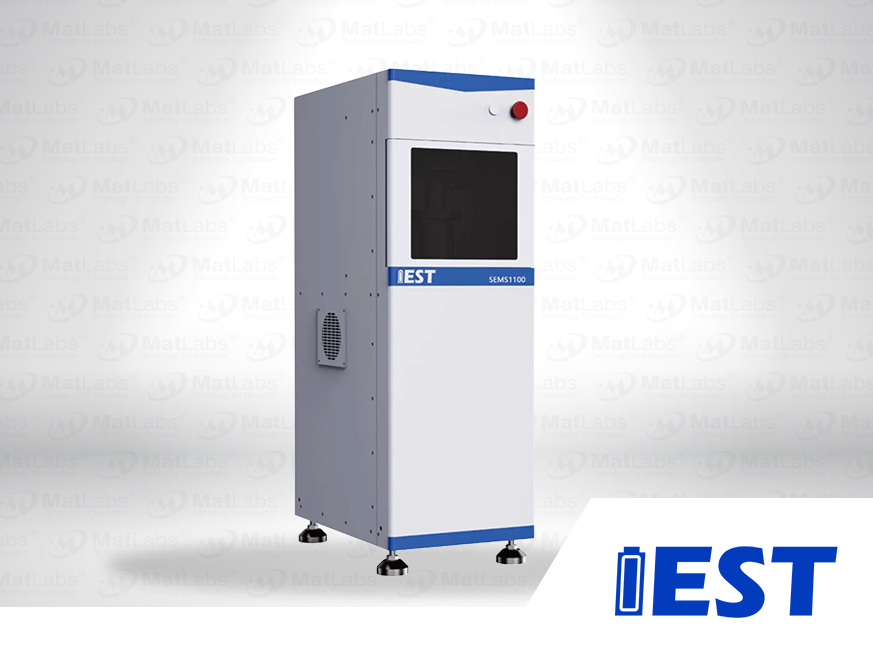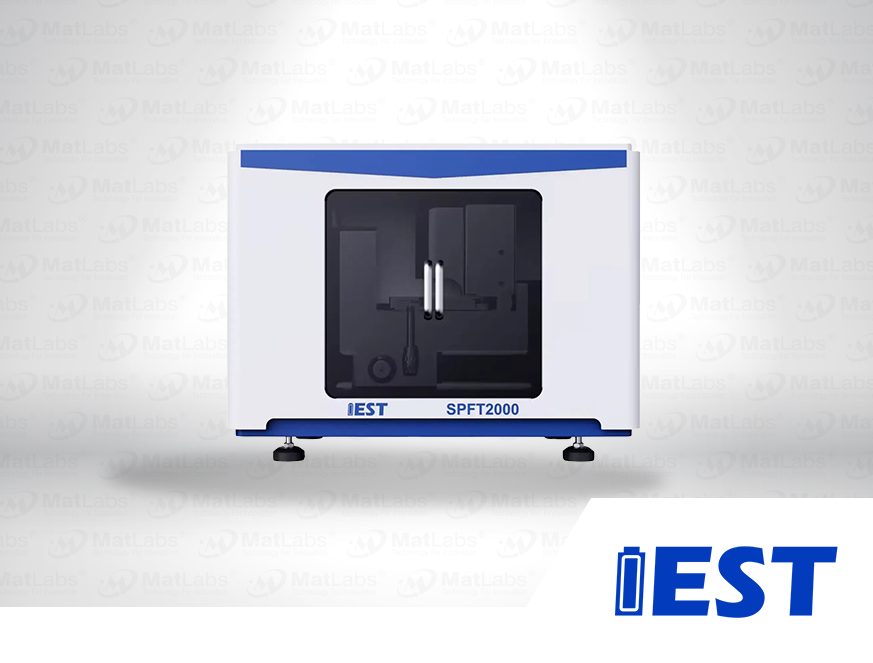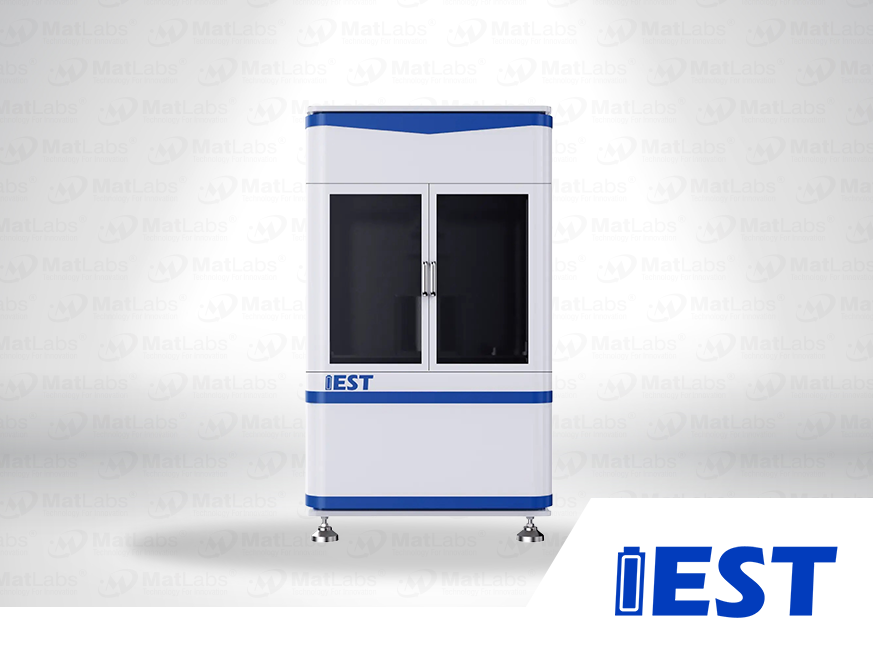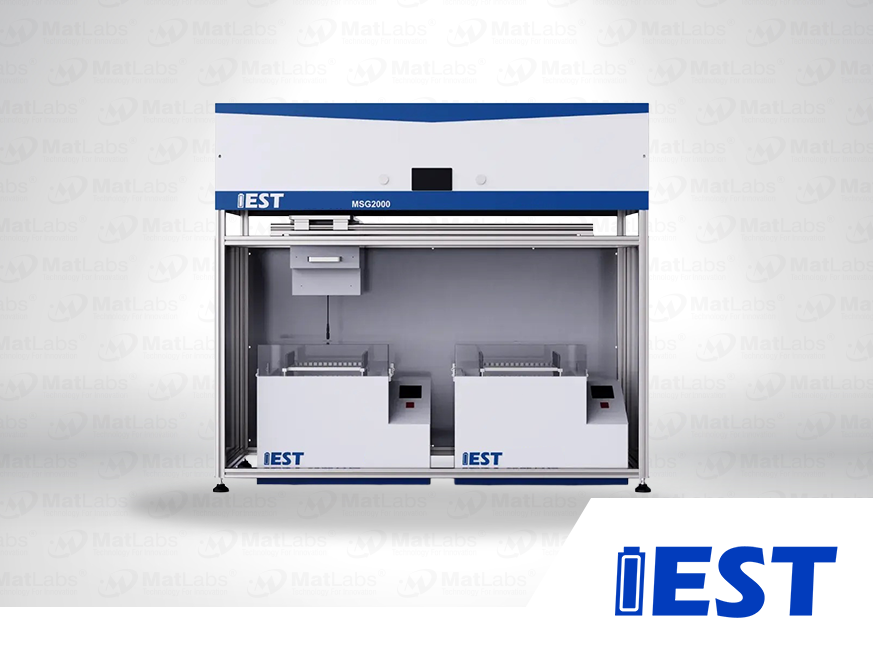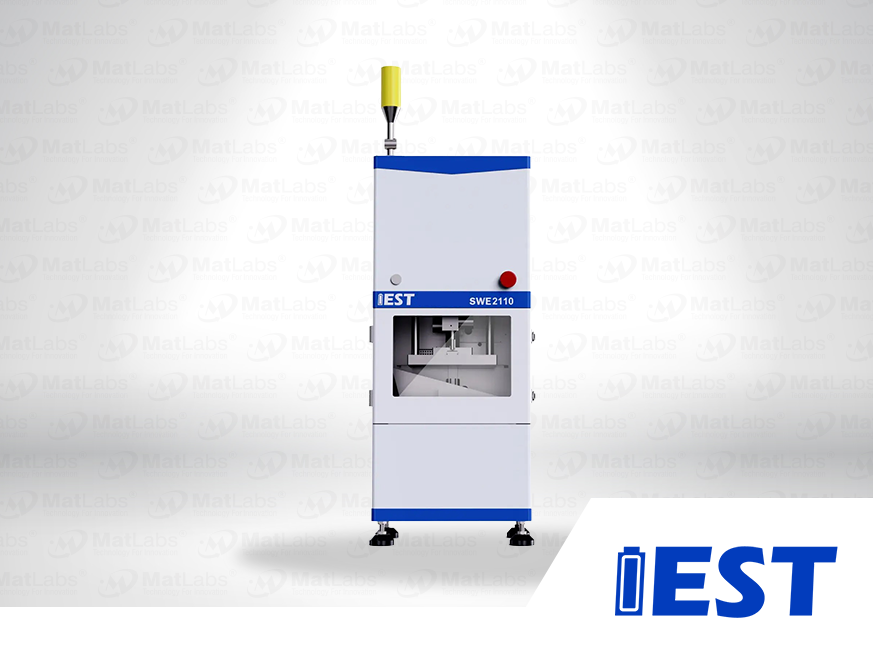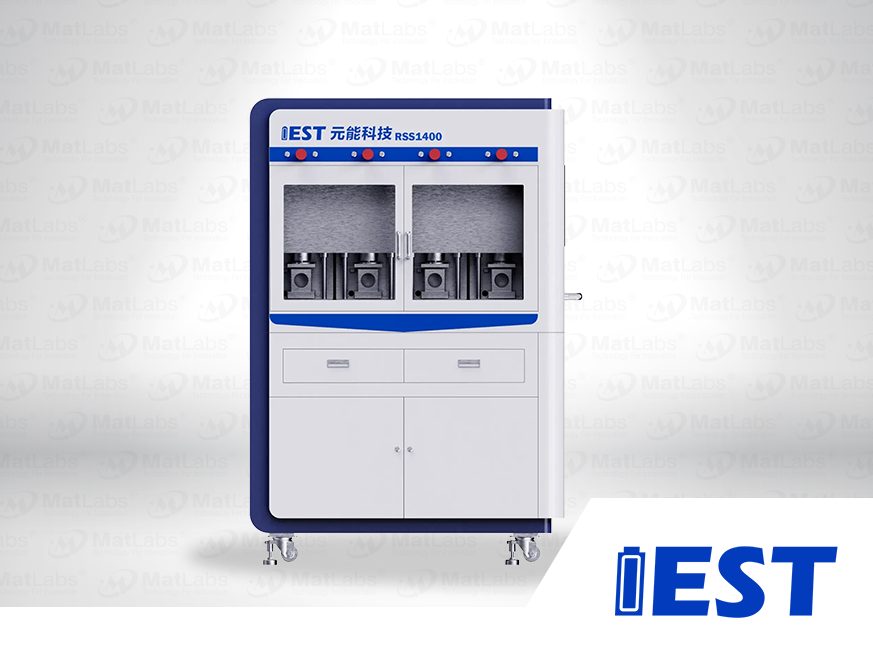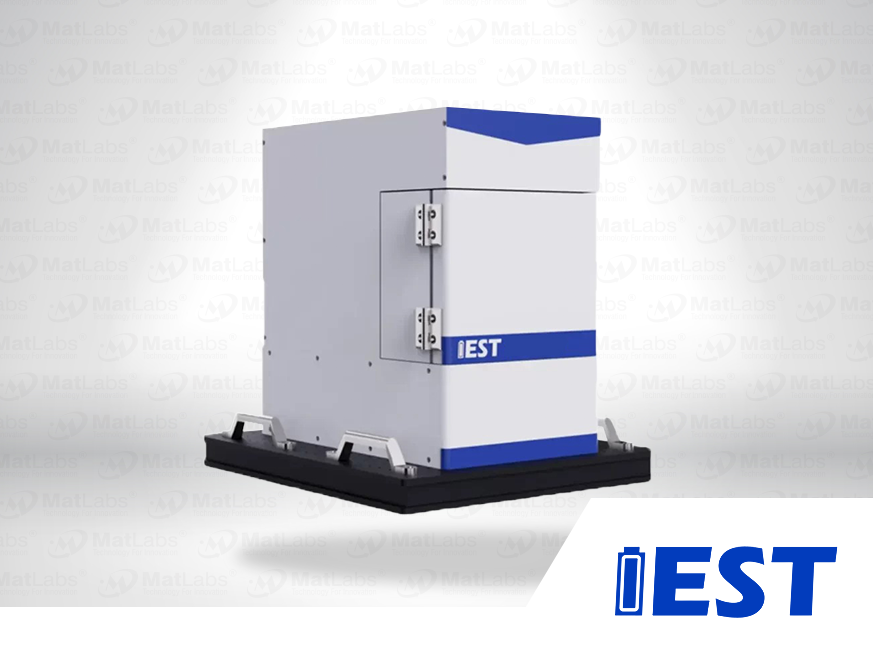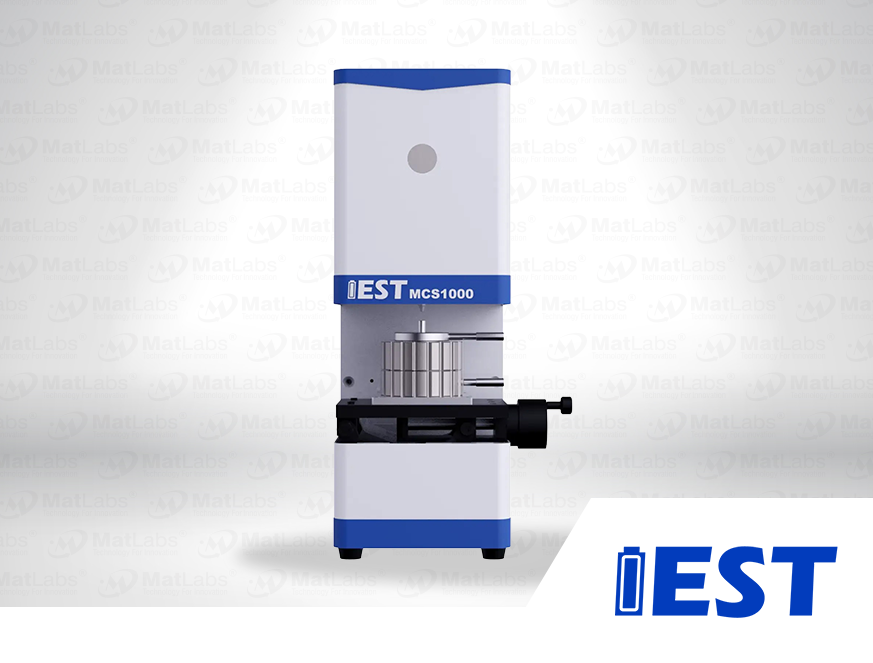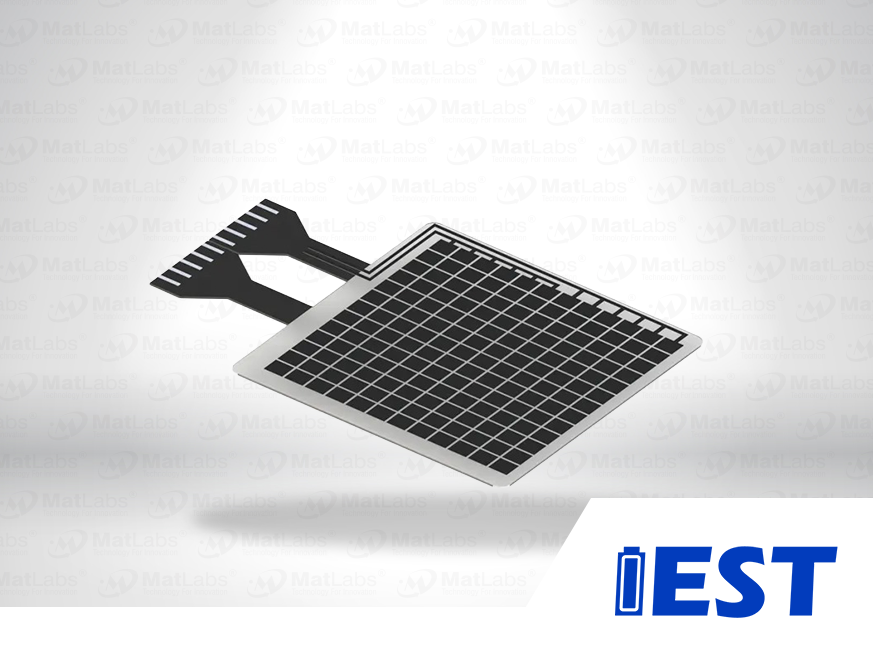
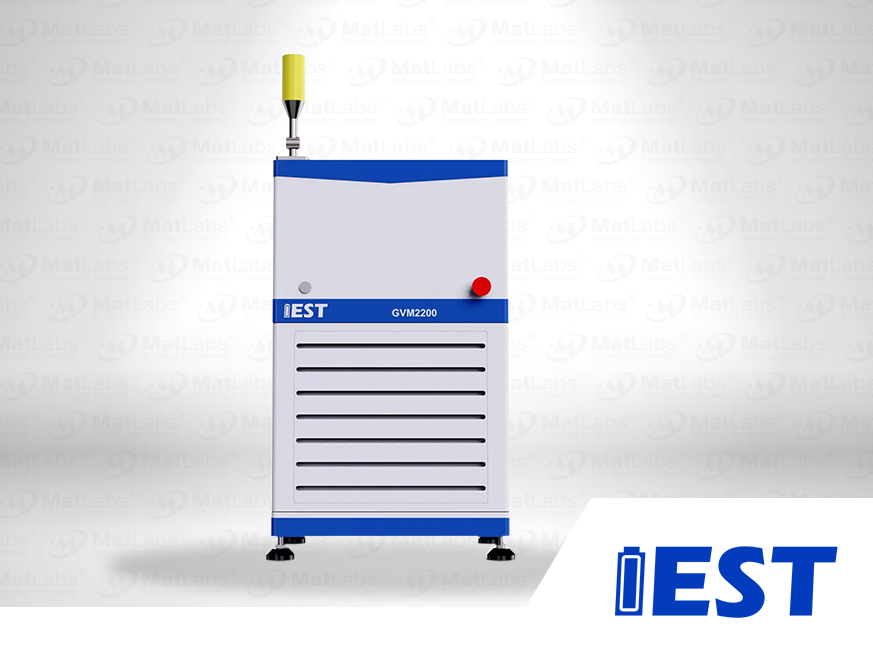
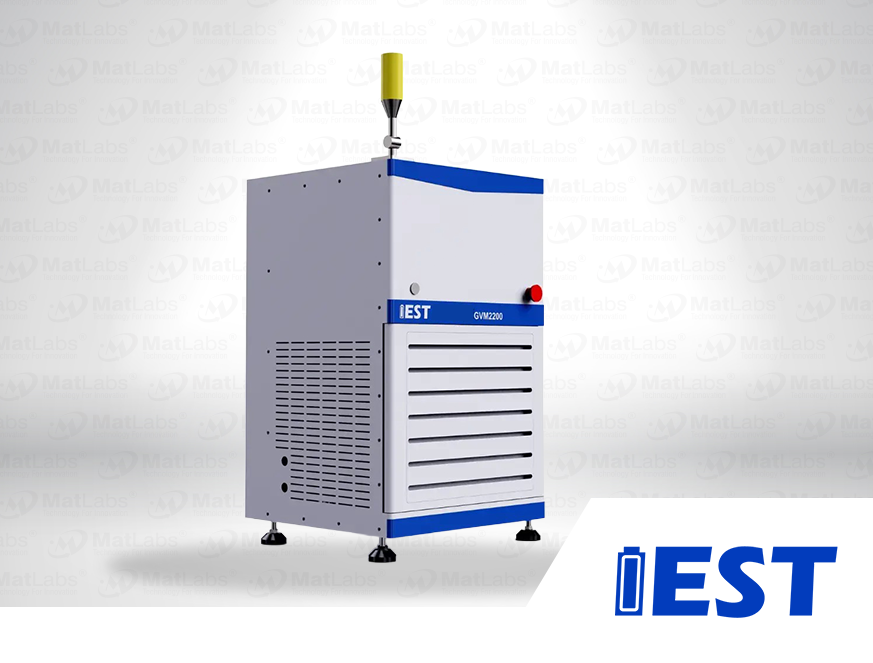
IEST In-Situ Battery Gassing Volume Analyzer (GVM2200)
IEST In-situ Battery Gassing Volume Analyzer(GVM Series) Using a high-precision simultaneous mechanical-electrochemical testing system, which can in-situ record battery cell volume changes in the whole charge-discharge process, and obtain battery cell accurate gassing volume and gassing rate during each stage. Eficiency lmprovement. Rapidly evaluate the gassing behavior of cells, shorten R&D period, and improve efficicency
Features:
- Multi-Level Gassing Testing: Material Gassing → Single-Layer Stacked Cell Gassing → Small Pouch Cell Gassing → Cylindrical & Prismatic Cell Gassing
- Multi-Channel Gassing Testing: Single channel → 2-channel → 8-channels Testing
- Multiple Temperature Settings: Room Temperature Testing → High and Low Temperature Testing (RT to 85℃ with Water Bath Control)
- Comprehensive Gassing Analysis: Gassing Volume → Gassing Pressure → Gassing Composition Analysis
- Simultaneous Mechanical-Electrochemical Testing System: In-situ long-term monitoring with 1 μL resolution
- Different temperature test environment: 20~85℃
- Special test software: can automatically synchronize charge and discharge data, collect and display mechanical test system data in real time, and automatically draw volume change curves and electrical performance curves.
- Auxiliary System: Special structure design, convenient to intervene in supporting auxiliary system, realize test temperature adjustment control
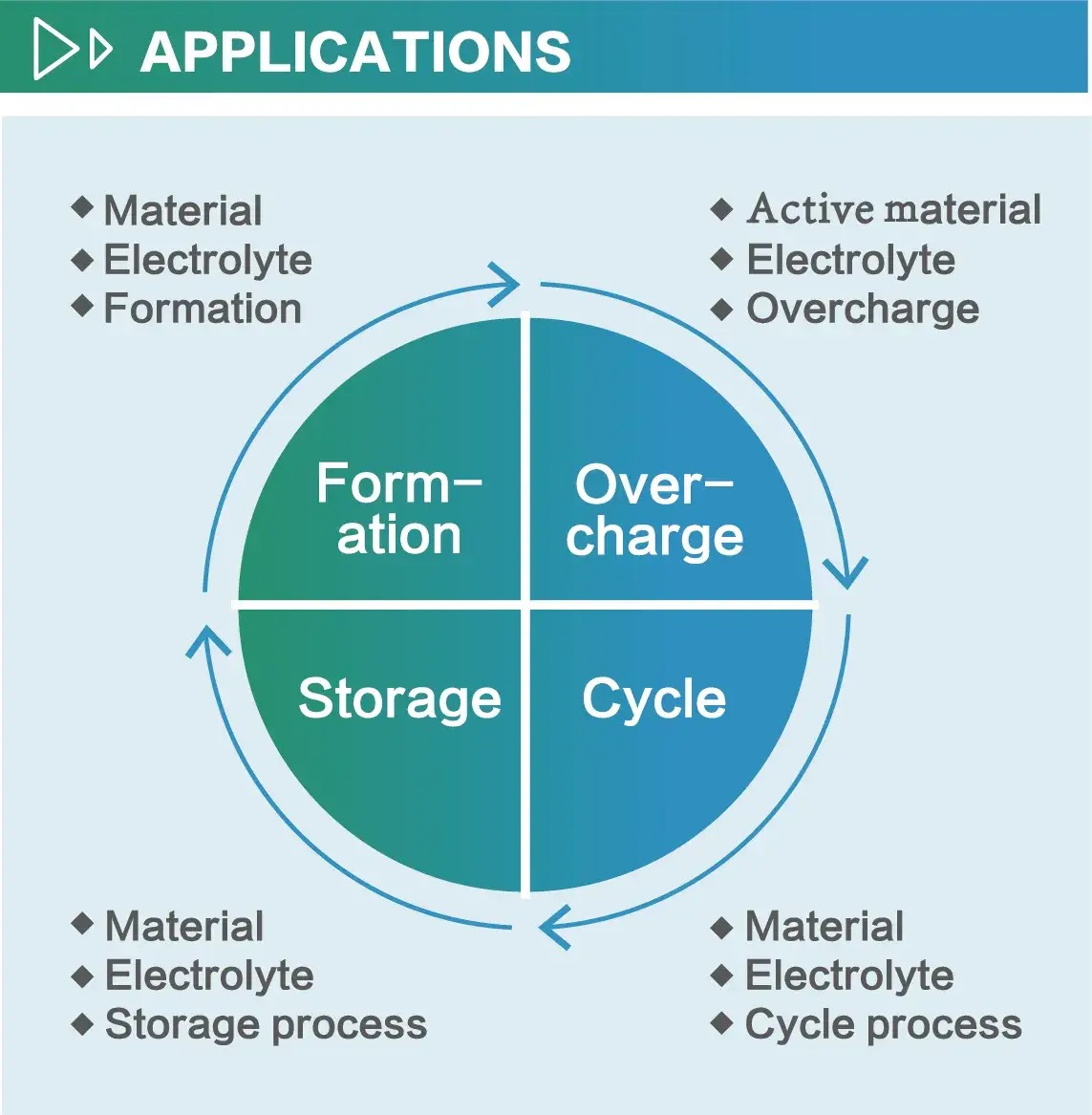
Application:
- Gas production analysis
- Overcharge gas analysis
- Cycling gas analysis
- Storage gas analysis, etc.
1. Traditional Testing Method
1.1 Single Volume Drainage Method
The Single Volume Drainage Method uses a balance to measure cell volume. It characterizes the volume change of a cell during the entire charging process by taking point-based measurements of the cell volume at different cutoff voltages and fitting the obtained volume data.
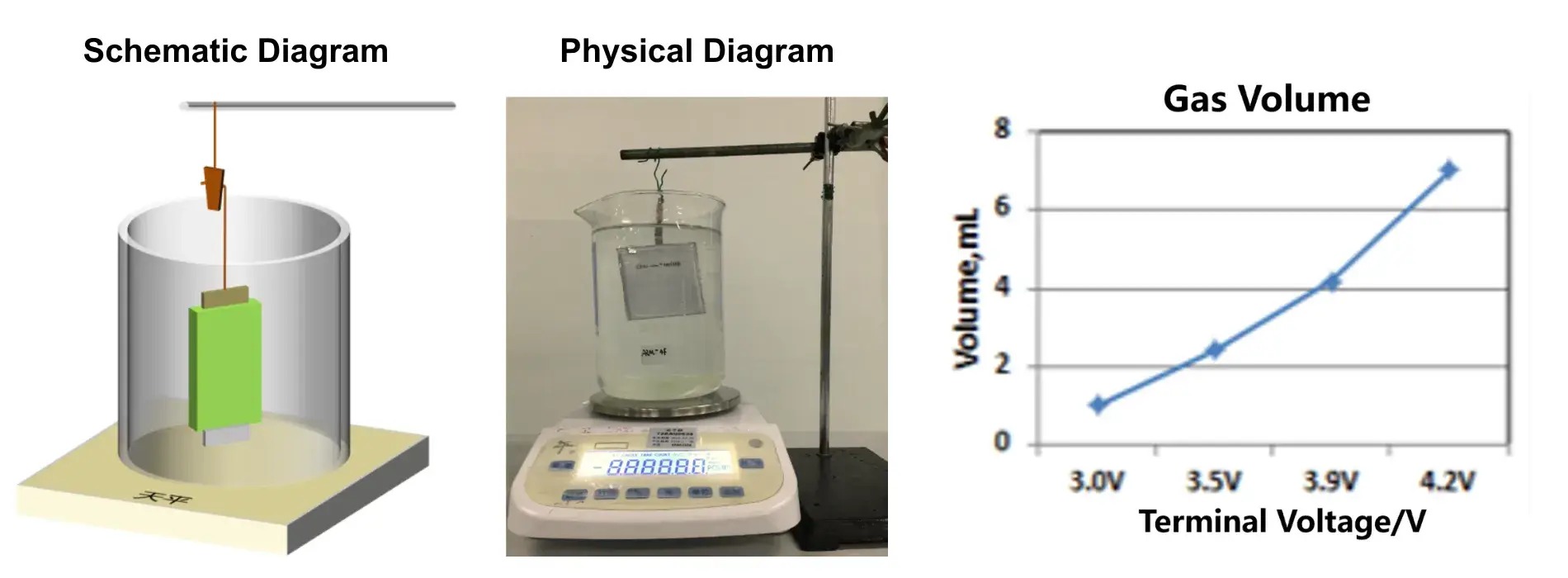
Advantages:
- Low equipment cost
- Simple structure
- Easy to operate
Disadvantages:
- Single point-based measurement: Cannot capture the continuous volume change and gas evolution rate variation throughout the entire cell formation process.
- Ex-situ measurement: The transfer process for measurement is susceptible to external environmental influences.
- Standard balance weighing: Incapable of long-term, stable, high-precision online measurements.
- High battery cell consumption: Requires many cells for testing, and cannot eliminate the impact of inconsistencies between cells.
1.2 Simple In-situ Gas Analyzer Device
Self-assembled basic in-situ apparatus
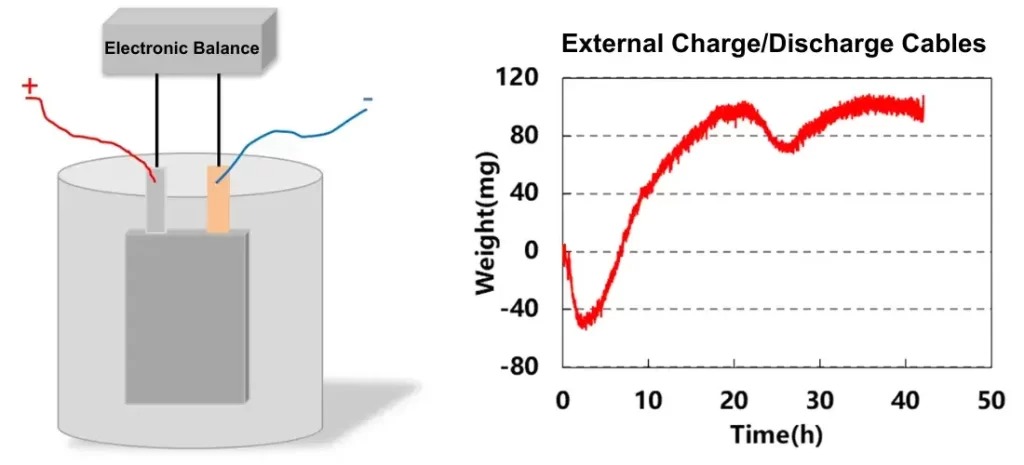
Disadvantages:
- Cannot perform temperature-variable testing at different temperatures;
- Unable to achieve force-electrical coupling, with significant load cell fluctuations due to external interference;
- Lacks automated data acquisition software, requiring manual post-processing and merging of data.
2. IEST Creative Solutions
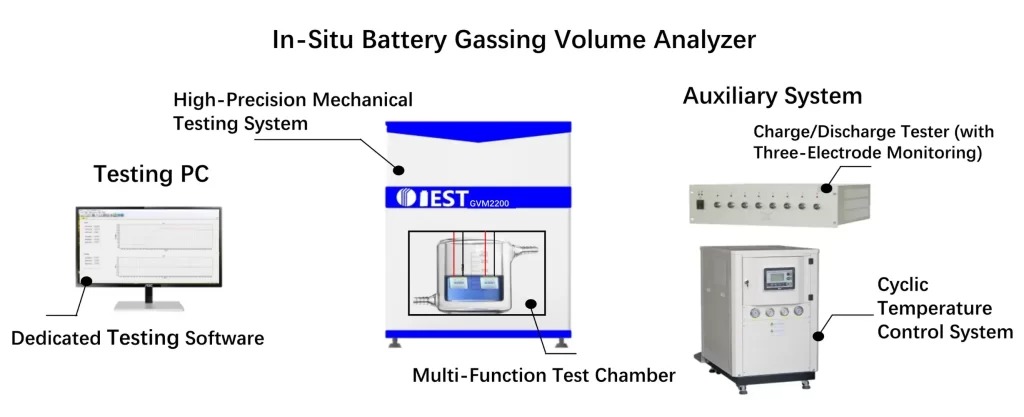
- Simultaneous Mechanical-Electrochemical Testing System: In-situ long-term monitoring with 1 μL resolution
- Temperature-controlled environments: 20°C to 85°C
- Dedicated software: Real-time data acquisition from mechanical test systems with automated plotting of volumetric expansion curves and electrochemical profiles
- Auxiliary System: Special structure design, convenient to intervene in supporting auxiliary system, realize test temperature adjustment control
3. Instrument Principles
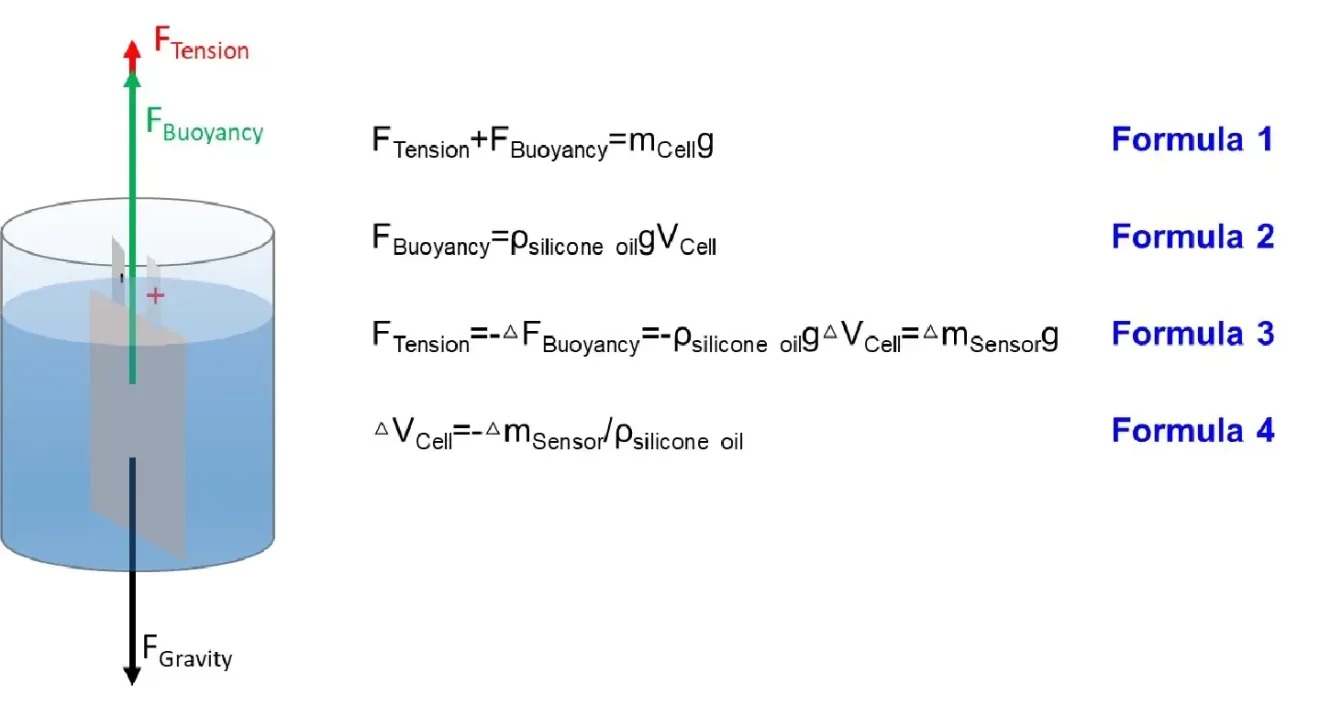
By combining Newton’s law (formula 1) and Archimedes’ buoyancy principle (formula 2), specialized sensors are used to measure the real-time mass changes of the cell during the charge & discharge process, and then the cell’s volume changes can be further calculated(formula 3 and 4).
4. Product Features
- Multi-Level Gassing Testing: Material Gassing → Single-Layer Stacked Cell Gassing → Small Pouch Cell Gassing → Cylindrical & Prismatic Cell Gassing
- Multi-Channel Gassing Testing: Single channel → 2-channel → 8-channels Testing
- Multiple Temperature Settings: Room Temperature Testing → High and Low Temperature Testing (RT to 85℃ with Water Bath Control)
- Comprehensive Gassing Analysis: Gassing Volume → Gassing Pressure → Gassing Composition Analysis
5. Applications
- Overcharge Gassing
- Cycle Gassing
- Storage Gassing
- Formation Gassing