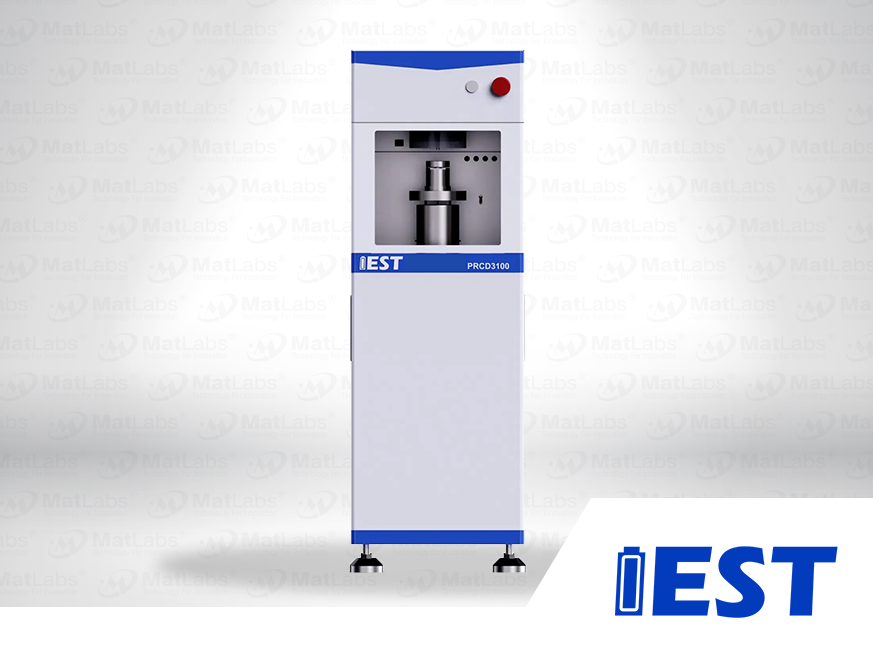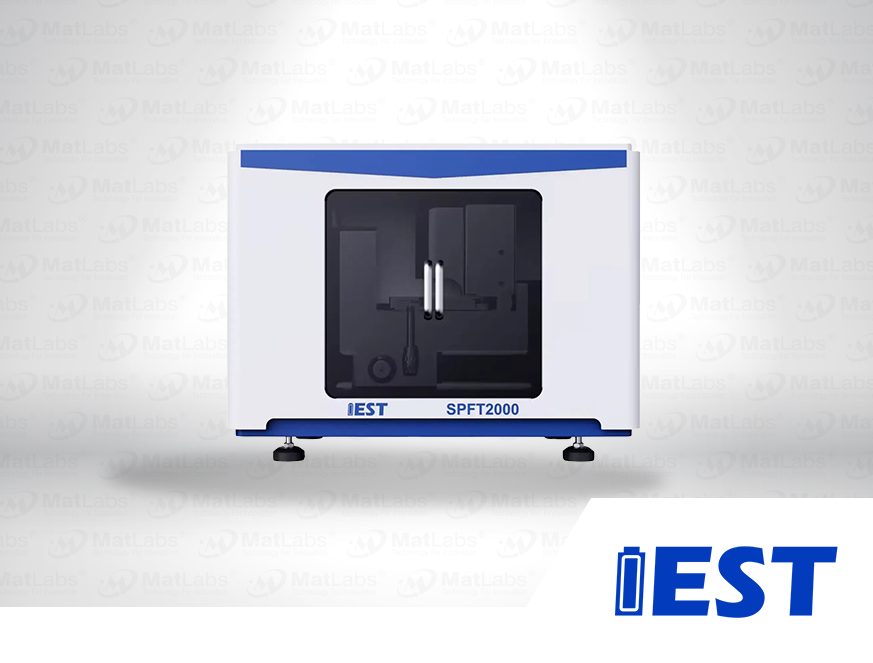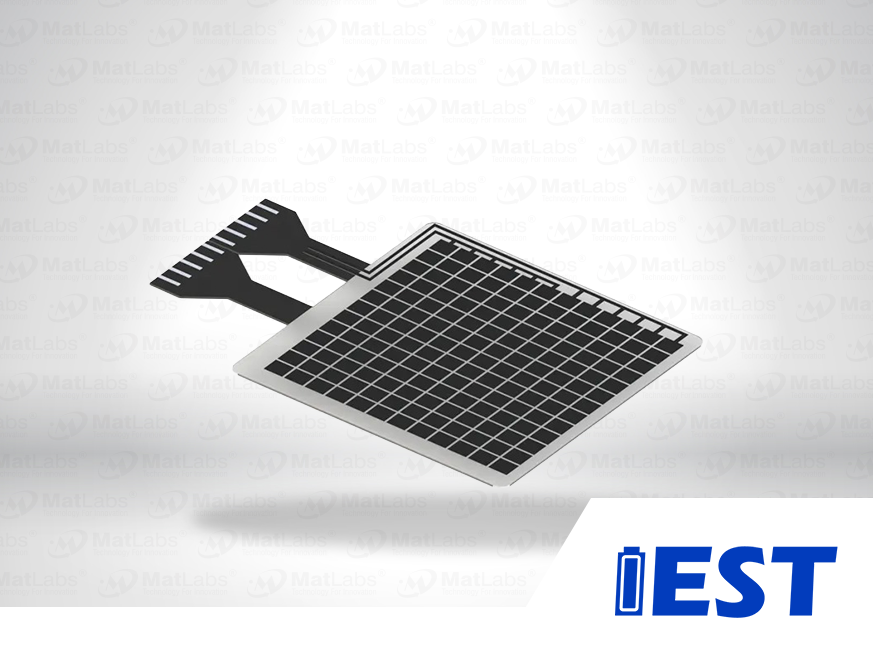
IEST Lithium Battery Slurry Resistivity Tester(BSR2300)
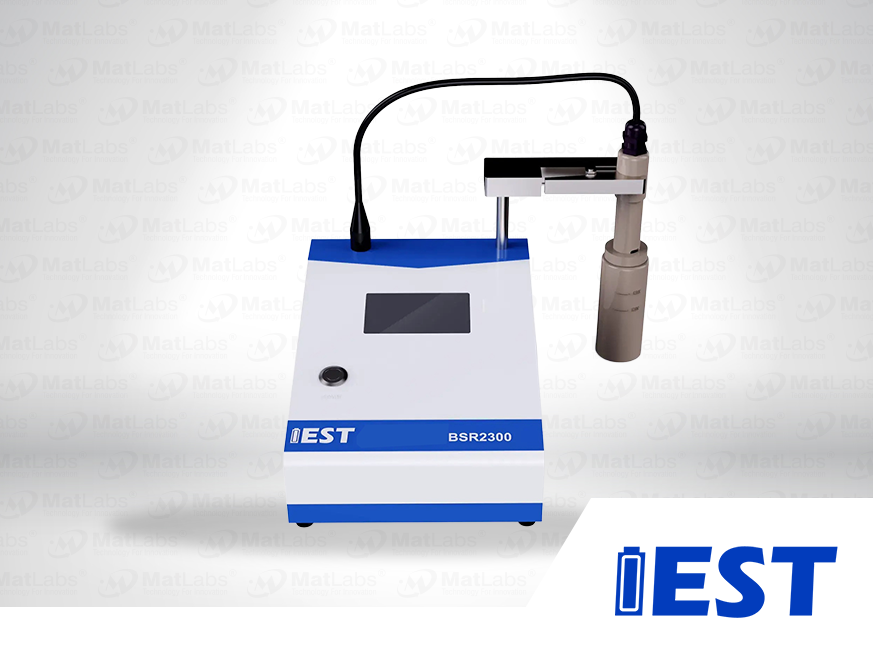
Introduction: BSR2300 use the upper, middle and lower three pairs of electrodes to test the resistivity of the slurry at different vertical heights, evaluate the conductivity of different battery slurry formulations and the settlement performance with the standing time. Assist R&D in battery slurry formulation development and mixing process stability monitoring.
Features:
- Applicable for conductivity evaluation and optimization of battery slurry formulation for Li/Na batteries and conductive additive slurries.
- Independent voltage/current paths eliminate induction interference on voltage measurements, enhancing resistivity detection accuracy.
- 10-mm diameter disk electrodes ensure maximum sample contact area, minimizing measurement errors.
- Triple-electrode configuration measures slurry resistivity while simultaneously evaluating sedimentation behavior.
- Real-time monitoring of resistivity changes at three vertically distributed positions tracks time-dependent slurry homogeneity.
Application:
- Li/Na battery cathode and anode electrode slurries
- Conductive agent slurries material evaluation
- Process stability evaluation
- Process pevelopment
- Slurry stability analysis
- Battery slurry formula evaluation
- Slurry sedimentation performance evaluation.
1. The Significance of Slurry Resistivity
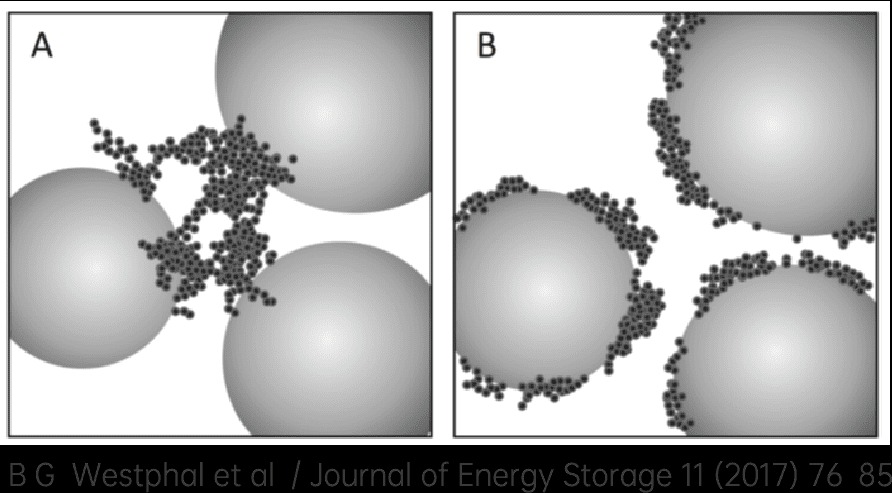
Battery Slurry serve as critical intermediates in lithium-ion battery production, where their homogeneity and stability critically determine final cell consistency and electrochemical performance. Current monitoring methods relying solely on battery slurry viscosity parameters fail to accurately assess electrical homogeneity and stability. Crucially, slurry conductivity exhibits significant correlations with formulation parameters including:
- Conductive additive type/content
- Binder type/content
- Solid loading
During standing periods post-mixing, slurries may undergo gelation and sedimentation, causing measurable conductivity variations. Thus, conductivity monitoring provides a robust method for characterizing slurry electrical homogeneity and stability.
Implementing battery slurry conductivity tracking enables:
- Material evaluation: Assessing impacts of active materials, conductive additives, binders, and solid content on electrochemical performance
- Process control: Detecting anomalies during mixing to prevent defective material flow-down, thereby reducing time/cost waste in downstream processes
- Formulation Control: Ensuring good dispersibility (no agglomeration), strong adsorption resistance to shear, and rapid adsorption kinetics for consistent and efficient battery slurry formulation.
2. Battery Slurry Resistivity Test Principle
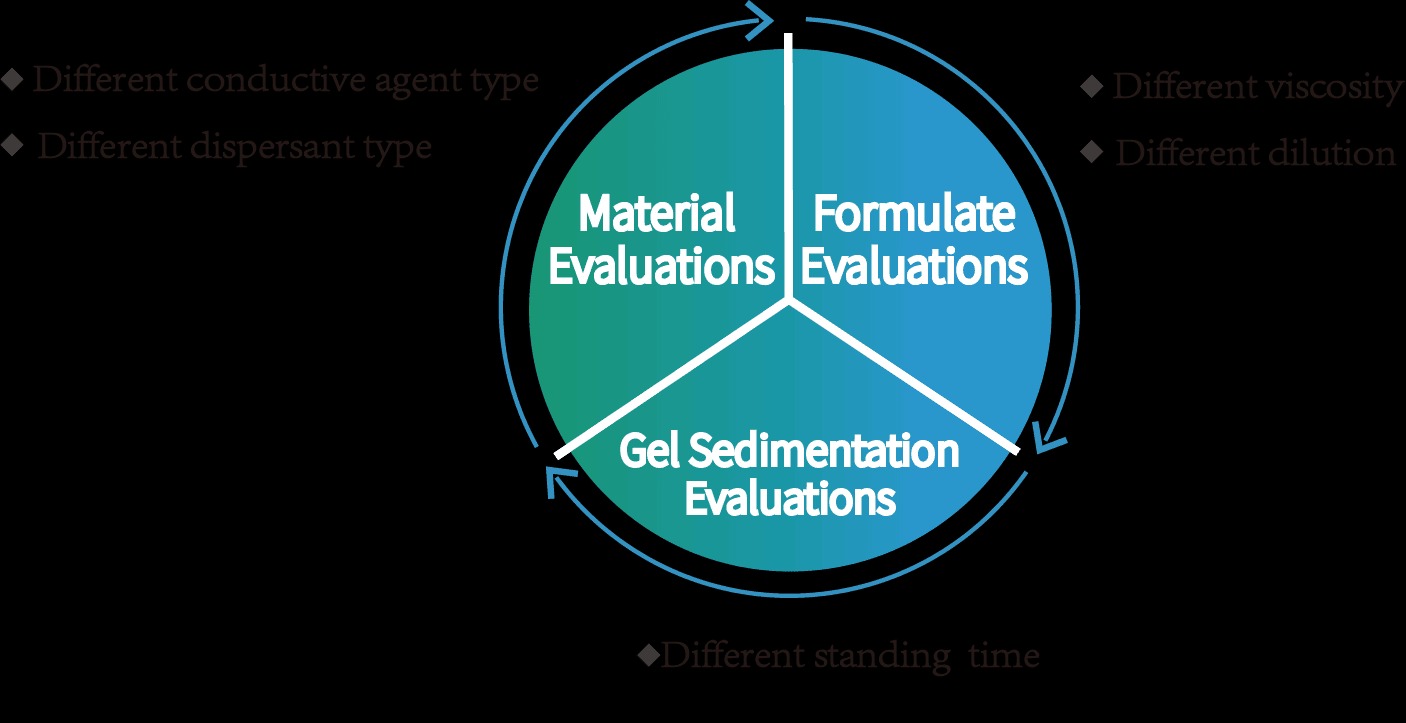
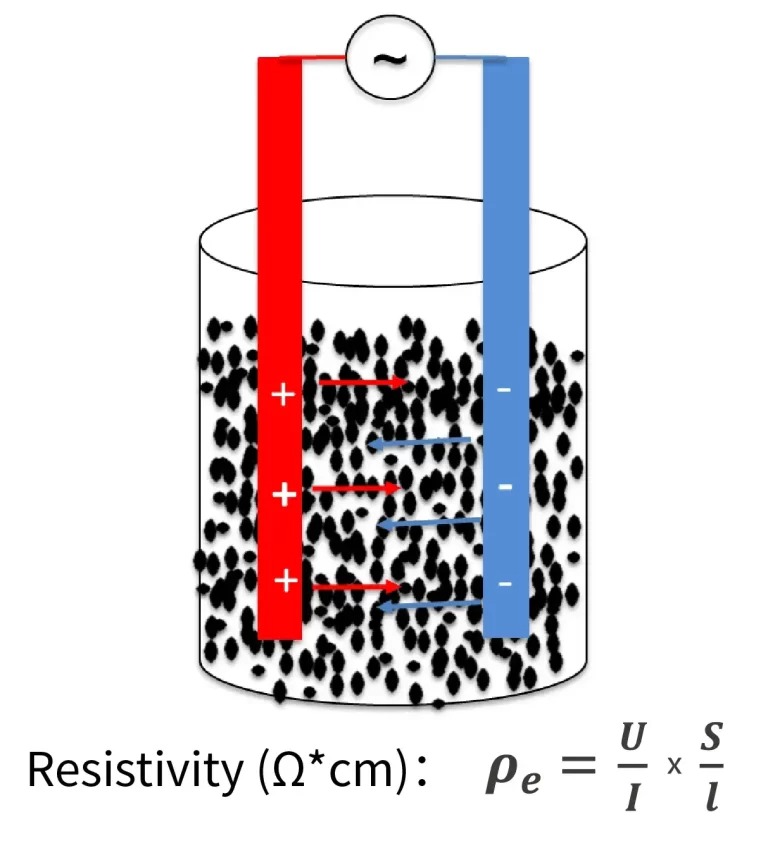
Test steps: Putting a certain volume of slurry (~80mL) into the measuring glass, inserting a clean electrode pen, start the software, start to test the changes in the slurry resistivity at the three pairs of electrodes over time and save it in the file.
Test parameters: Resistivity, Temperature, Time
Calculation formula:
Features:
- Applicable for conductivity evaluation and optimization of battery slurry formulation for Li/Na batteries and conductive additive slurries.
- Independent voltage/current paths eliminate induction interference on voltage measurements, enhancing resistivity detection accuracy.
- 10-mm diameter disk electrodes ensure maximum sample contact area, minimizing measurement errors.
- Triple-electrode configuration measures slurry resistivity while simultaneously evaluating sedimentation behavior.
- Real-time monitoring of resistivity changes at three vertically distributed positions tracks time-dependent slurry homogeneity.
3. Slurry Resistivity Analyzer MSA
Test program: Three operators, five parallelsamples, and random testing
Test method: Sonicating the electrode pen withdeionized water for 30 seconds,and drying it with the dust-freepaper. Then five parallel sampleswas tested, and the fifth set of datawas taken for the GRR analysis

4. Applications